Home › Greeley, CO
Rubber Roof Repair in Greeley, CO
Rubber Roof Repair Kings provides rubber roof repair, EPDM seam and patch repair, and flat roof leak repair services in the Greeley, CO area for both residential and commercial properties. Contact us now for a free estimate.
How Much Does Rubber Roof Repair Cost in Greeley, CO?
Rubber roof repair in Greeley, CO costs anywhere from $210 to $1,270 on average for a typical leak, puncture, seam, or flashing repair on an EPDM roof. The price depends on how much membrane is damaged, how many leaks there are, roof height and access, whether gravel or pavers have to be moved, and whether wet insulation underneath needs replacing. Send us photos for pricing.
Do You Cover All of Greeley?
Yes, we take rubber roof repair requests across Greeley and the rest of the Greeley, CO area. Labor and material costs here run about 6% above the national average, and the price range above already reflects that.
Do You Repair Rubber Roofs on Both Homes and Commercial Buildings?
Yes, we repair EPDM rubber roofs on houses, garages, porches, additions, apartment buildings, and commercial flat roofs. Tell us the property type and roughly how big the roof is.
Do You Service My Area?
Yes, we cover the Greeley, CO area. Send us the property address and we'll confirm.
Can a Leaking Rubber Roof Be Repaired Instead of Replaced?
Yes, in most cases, if the leak is at a seam, a flashing, or a single puncture and the rest of the rubber is still flexible. We usually suggest replacement when it leaks in several places or has shrunk across the roof.
What Usually Causes a Rubber Roof to Leak?
Most leaks we find start at seams and at the flashing around pipes, vents, and walls. Punctures, shrinkage at the edges, and standing water come next.
Is It Worth Repairing a 20 Year Old Rubber Roof?
Yes, often, if the rubber is still flexible and leaks in only a few spots. Most rubber roofs last 20 to 30 years, so we'll weigh the repair price against a new roof.
Do You Handle Emergency Rubber Roof Leaks?
Yes, we can usually tarp it or put on a temporary patch, then make the permanent repair once the roof is dry.
How Soon Can You Come Out to Look at My Roof?
We can usually inspect within a few days, sooner for an active leak.
What Information Do You Need When I Contact You?
We need the address, where the water shows up inside, roughly how big and old the roof is, and photos if you can take them safely. Tell us if it's still under warranty.
Will I Need to Be Home During the Repair?
No, not if we can get onto the roof from outside. We may need inside access once to see the ceiling or to check a water test.
Can I Request a Rubber Roof Repair if I Am Renting?
Yes, but the owner or landlord needs to approve the work first.
Can You Work With My Condo Association or Property Manager?
Yes, we can coordinate access and approval with an HOA, condo board, or property manager. Shared flat roofs usually need the association's sign-off first.
Do I Need a Permit to Repair a Rubber Roof?
No, patching and seam repairs usually don't need one. Replacing the membrane or the decking often does, and your local building department makes that call.
Can I Get a Price Before the Work Begins?
Yes, we confirm the price before we start. If we cut into a spot and find wet insulation or soft decking, we show you and price that before going further.
Will Insurance Pay for My Rubber Roof Repair?
Yes, often, when the damage is sudden, like a storm or a falling limb. Leaks from age or wear usually aren't covered. We can give you photos and an invoice for the claim.
How Long Does a Rubber Roof Repair Take?
We finish most patch, seam, and flashing repairs in a few hours. Jobs that need wet insulation cut out and replaced take longer.
Can You Fix Seams That Are Pulling Apart on My Rubber Roof?
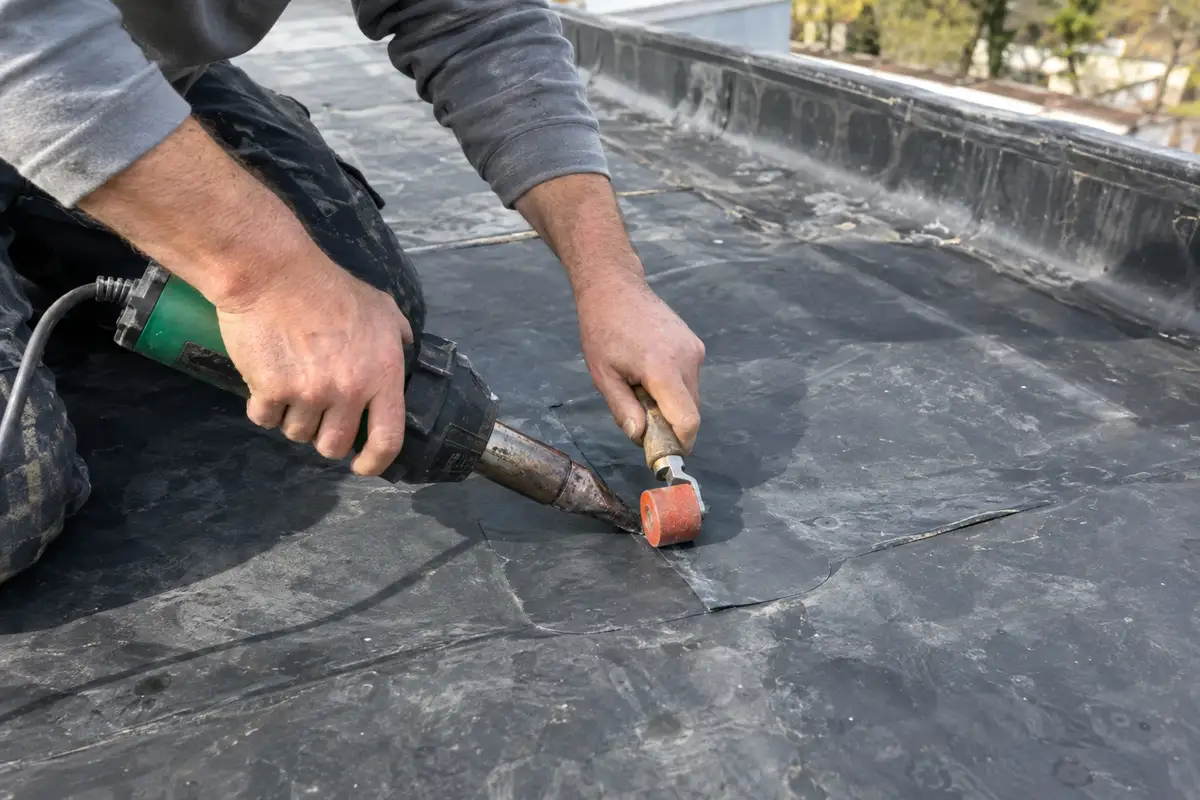
Yes, we clean and prime the seam, lay 6 inch EPDM cover tape over the joint, roll it down, and seal the edges with lap sealant.
Can You Patch a Puncture or Tear in a Rubber Roof?
Yes, we clean and prime the area, then put down an EPDM patch that runs at least 3 inches past the damage on every side, with rounded corners and sealed edges.
Can You Fix a Rubber Roof Leak Around a Pipe, Vent, or Skylight?
Yes, we replace the pipe boot or wrap the opening with uncured EPDM flashing, which stretches to fit odd shapes, then seal the edges.
How Do You Find a Leak on a Rubber Roof?
We start at the seams and flashing upslope of the stain, because water runs under the membrane and can come out several feet, sometimes 10 feet or more, from where it gets in. If that doesn't turn it up, we water test the suspect spots.
Can You Fix Ponding Water on My Flat Rubber Roof?
Yes, we clear the drains first, and for low spots we can add tapered insulation or a cricket. Water still standing 48 hours after rain counts as ponding, and repairs in that spot tend to fail sooner.
Can I Use Roof Cement or Silicone on a Rubber Roof Leak?
No, asphalt roof cement and tar break down EPDM, and most silicone won't bond to it. Rubber needs EPDM primer, tape or patches, and lap sealant.
Can I Repair My Rubber Roof Myself?
Yes, a small puncture can be patched with an EPDM patch kit, primer, and a roller. Seams, flashing, wet insulation, and leaks you can't find are better left to us.
How Long Will a Rubber Roof Repair Last?
Years, if the rubber was cleaned, primed, and taped properly and the membrane around it is sound. Most peeling patches we see went on dirty rubber, skipped the primer, or used the wrong product.
Can You Repair a Rubber Roof in Winter?
Yes, as long as the surface is dry and at least 40°F, since most EPDM primers and seam tapes won't bond below that. In a cold snap we may put on a temporary fix and finish on a warmer day.
Can You Put a New Rubber Roof Over the Old One?
Yes, if the old roof is dry, sound, and only one layer. Building codes generally don't allow a recover over a water-soaked roof or over two or more existing layers, so then we tear off to the deck.
Will a Repair Void My Rubber Roof Warranty?
Yes, it can if the repair isn't done the way the manufacturer requires. If your roof is still under warranty, check with the installer or manufacturer first and send us the paperwork.
Can You Repair a Rubber Roof That Has Shrunk and Pulled Away From the Walls?
Yes, we reflash the corners and wall edges where the rubber has pulled tight or lifted. If shrinkage runs across the whole roof, we usually recommend recoating or replacing it.
Can You Fix Bubbles or Blisters in My Rubber Roof?
Yes, we cut the blister open, dry out what's underneath, and patch over it. Bubbles across a large part of the roof usually point to a bigger problem.
Can You Fix Leaks Around Rooftop AC Units?
Yes, curbs under AC units and exhaust fans are a common leak spot. We reflash the curb and check the rubber around it for punctures from service traffic.
Can You Fix a Leak at a Roof Drain or Scupper?
Yes, we clear clogged drains and scuppers and reseal the flashing around them. A blocked drain is one of the most common reasons water sits on a flat roof.
Can You Repair a Rubber Roof on a Garage, Porch, or Shed?
Yes, we repair rubber roofs on garages, porches, sheds, dormers, and additions. Tell us roughly how big the roof is and whether it's reachable with a ladder.
Can You Repair a Rubber Roof With Gravel or Pavers on Top?
Yes, we move the stone or pavers off the damaged area, repair the membrane, and put them back. Let us know they're there, since it adds time.
Can You Repair Storm Damage on a Rubber Roof?
Yes, we patch punctures and tears from hail, flying debris, and fallen branches, and check the seams and flashing nearby. If a branch broke the deck, we rebuild that section first.
Can You Repair a Rubber Roof With Wet Insulation Underneath?
Yes, we cut out the wet insulation or fiberboard, replace it, and patch over the new board. If a large area is soaked, replacing that section usually makes more sense.
Can You Fix a Rubber Roof Someone Patched With Tar or Roof Cement?
Yes, but tar and asphalt roof cement break down EPDM, so we take off the old patch and the damaged rubber under it and patch with new EPDM.
What Should I Do While My Rubber Roof Is Leaking?
Put buckets under the drips, move belongings away, and take photos for your insurer. Keep water away from light fixtures and outlets, and stay off the roof in the rain.
Can I Walk on My Rubber Roof to Check the Damage?
Yes, for a quick look in soft-soled shoes, but stay off it when it's wet or icy. Dropped tools and loose gravel can puncture the rubber.
Should I Shovel Snow Off My Rubber Roof?
Yes, if it gets heavy, but use only a plastic shovel and leave an inch or two of snow on the membrane so you don't cut the rubber. If it's icy, stay off and call us.
Can You Repair a Rubber Roof While It's Raining?
No, the rubber has to be dry for tape and patches to bond.
Is a Rubber Roof the Same as EPDM?
Yes, in most cases "rubber roof" means EPDM, a synthetic rubber sheet that's usually black. White roofs with heat-welded seams are usually TPO or PVC.
What Materials Do You Use to Repair a Rubber Roof?
We use EPDM membrane cleaner, primer, pressure-sensitive seam tape and patches, uncured flashing for odd shapes, a seam roller, and lap sealant on every edge.
Can You Coat My Old Rubber Roof Instead of Replacing It?
Yes, if the membrane is still sound but worn or chalky. We clean it and fix the seams and leaks first, then roll on a liquid EPDM coating.
How Often Should a Rubber Roof Be Inspected?
Twice a year, in spring and fall, and after any big storm.
